Jordan
Bold cultured character, inseparable from mansaf and the shared ceremonial table.
The world of jameed
المنسف يجمعنا
Jameed is more than a preserved dairy ingredient. It is a living record of pastoral knowledge, regional taste and the instinct to turn what the land provides into food that can gather a community.
Across regional foodways, cultured sheep’s or goat’s milk is salted, shaped and dried into concentrated flavor. Methods and culinary expressions differ by place; in Jordan, jameed reaches one of its most celebrated forms in mansaf and the generous shared table.
Follow the journey ↓One craft · Many expressions
Jameed belongs to a wider world of pastoral preservation, cultured dairy and generous tables. JAMEEDNA gives every regional expression room to speak in its own flavor and visual language.
Bold cultured character, inseparable from mansaf and the shared ceremonial table.
A Levantine expression shaped for layered cooking, family meals and refined balance.
An approachable Nile-inspired chapter designed around warmth, abundance and value.
An olive-country expression envisioned through limestone, orchards and generous hospitality.
A Mesopotamian chapter inspired by deep pantry traditions and abundant tables.
A future-facing expression shaped by desert hospitality and ceremonial welcome.
Founding chapter · Jordan
In Jordan’s southern highlands, seasonal milk was made to last—not by removing its character, but by concentrating it.
Jameed developed within an agro-pastoral way of life shaped by flocks, seasons and resourcefulness. Sheep’s and goat’s milk could be cultured, strained, salted, shaped and dried until firm. The result traveled well, kept beyond the milking season and could be awakened again with water.
That practical act of preservation created something extraordinary: a bold, savory acidity that became inseparable from Jordan’s most significant communal dish.
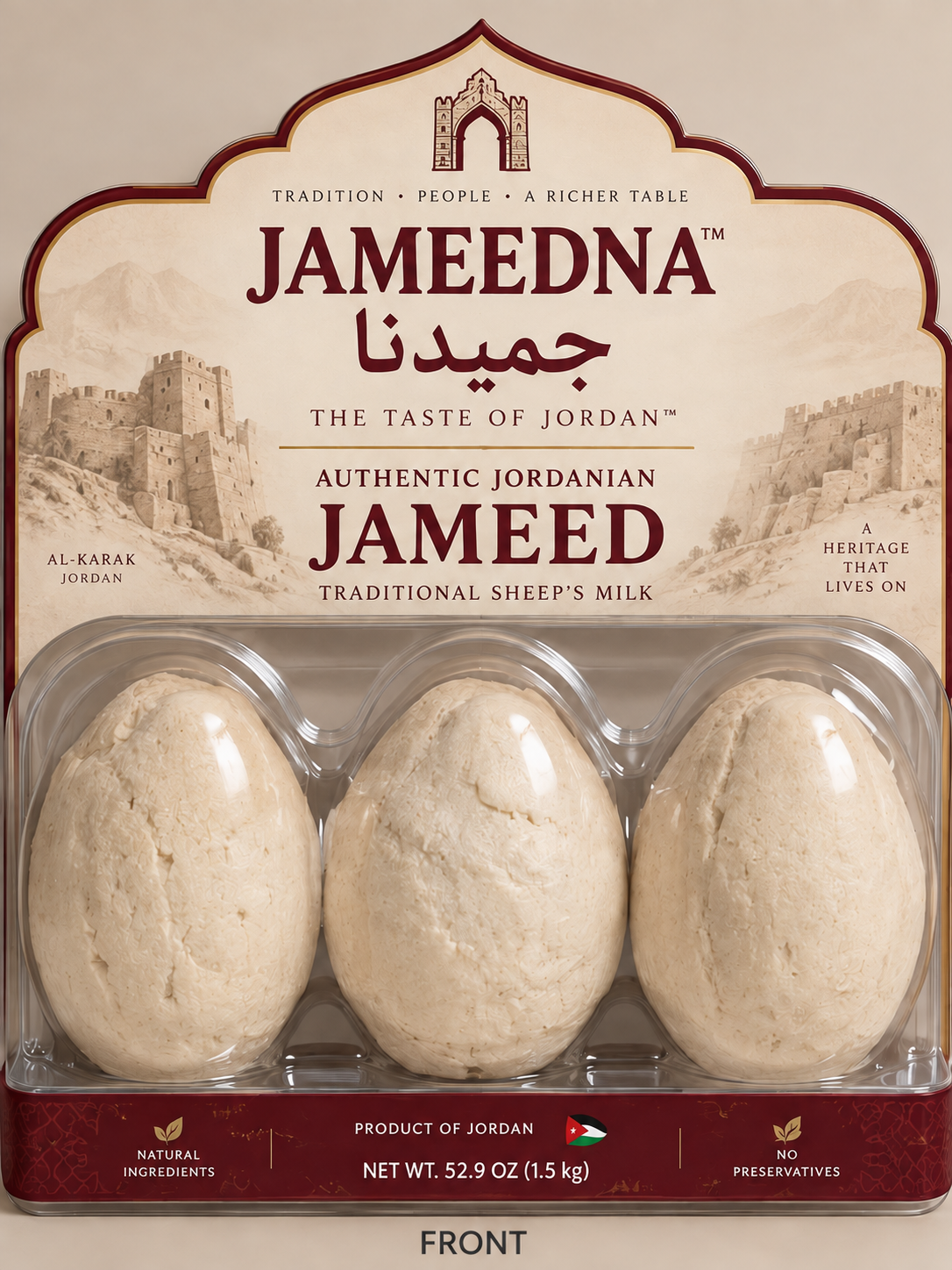
AL‑KARAKSouthern Highlands · Jordan
Chapter two · The craft
Methods vary by family and region, but the traditional journey follows a clear purpose: remove moisture, build flavor and preserve the milk.
Sheep’s or goat’s milk is transformed into yogurt, beginning the fermentation that develops jameed’s characteristic tang.
Traditional churning separates butter and leaves a cultured base ready to be concentrated.
The cultured milk is drained so whey escapes and the texture becomes dense enough to shape.
Salt supports preservation and flavor before the thick paste is formed into its familiar stone-like shape.
Careful drying removes the remaining moisture and concentrates the dairy into a firm pantry staple.
Chapter three · The table
Each layer has a role. Together, they turn nourishment into ceremony.
Almonds or pine nuts add warmth, texture and a celebratory finish.
Generous pieces of lamb rest over rice or, in some traditions, bulgur.
The reconstituted yogurt sauce carries the dish’s deep, tangy identity.
Thin bread lines the platter, receiving the sauce and binding every layer.
Chapter four · The meaning
Across Jordan, mansaf appears wherever a community needs to say something larger than words.
To honor a guest is to open the home and serve with abundance.
Weddings, graduations, holidays and milestones call families together.
A shared mansaf can mark restored relationships and renewed social bonds.
In times of condolence, food becomes service, presence and collective care.
At the communal platter
Mansaf etiquette is an expression of awareness: of the host, the guest, the elder and every person sharing the tray.
Traditionally, guests share one large platter, standing or gathering closely together.
Bread and jameed help gather rice and lamb into a compact bite. Many homes also welcome spoons today.
Each guest enjoys the portion directly in front of them, respecting the shared space.
The host watches the table, offers the finest pieces and makes sure generosity is felt.
Recognized living heritage
In 2022, UNESCO inscribed “Al‑Mansaf in Jordan, a festive banquet and its social and cultural meanings” on the Representative List of the Intangible Cultural Heritage of Humanity.
The recognition extends beyond a recipe. It honors the preparation, knowledge, stories, songs, gatherings and social meanings carried with the dish.
Carry the tradition forward
تقاليد متعددة، مائدة واحدة تجمعنا
Choose your JAMEEDNA